Alan Douglas Erased Hendrix’s Band from the Tape
The Alan Douglas Hendrix tape erasure involved far more than a controversial remix of unfinished material. While producing the 1975 album Crash Landing, Douglas removed selected bass, drum, secondary guitar, and other performances from surviving multitrack tapes, including contributions by Billy Cox, Rocky Isaac, Buddy Miles, and additional Hendrix collaborators. He then commissioned new session parts around the remaining Jimi Hendrix performances and released the reconstructed recordings commercially. The evidence establishes the substitution and the resulting historical damage, although Douglas’s motive, the degree of racial intent, and the completeness of later restoration remain contested. Safety copies and alternate sources eventually allowed Experience Hendrix to recover parts of the original record, but they could not make every altered master whole.
In 1975, five years after Jimi Hendrix died in a London hotel room, the guitar world was still waiting for him. His records continued to sell, music magazines continued placing his face on their covers, and a new generation of guitarists was beginning its education inside recordings made by a man who had been gone for half a decade. The demand for Hendrix had survived Hendrix himself.
The unfinished tapes offered the record industry a way to keep that presence alive. Hundreds of hours of studio material remained in the archive, including alternate performances, incomplete songs, jams, experiments, and pieces of the album Hendrix had been developing before his death. Some recordings approached completion. Others were working documents that Hendrix had never sequenced, approved, or prepared for release.
Control of those tapes had never been stable. Hendrix’s manager, Mike Jeffery, supervised the first wave of posthumous releases after September 1970, then died in an aviation collision over France in March 1973. The master tapes, session logs, contracts, and unfinished recordings had been governed by a man who did not survive the decade. Authority fractured, and the estate entered a prolonged management vacuum while Warner Bros. and Reprise Records faced a market that still wanted Hendrix but was becoming less responsive to conventional archival releases.
The labels saw a commercial problem. The tapes contained something more difficult: unfinished musical interactions involving an artist who could no longer explain his intentions and collaborators whose performances had never been designed as raw material for another producer. Into that uncertainty, a market was waiting to be fed.
Jeffery, the Labels, and the Man They Hired
By early 1975, the first posthumous Hendrix albums had completed much of their commercial work. The most accessible material had already been released, and the remaining archive contained fewer recordings that could simply be mixed and issued as coherent new product. Warner Bros. and Reprise needed another album, which meant finding someone capable of making incomplete recordings sound current.
The producer they selected was Alan Douglas. His background was not rooted in the British blues-rock environment that had shaped the Jimi Hendrix Experience. Douglas came from jazz, and his credentials were substantial. He had produced Money Jungle, the 1963 meeting of Duke Ellington, Charles Mingus, and Max Roach that became one of the defining piano-trio documents in modern jazz.
That history complicates the easiest portrait of Douglas. He was no amateur who wandered carelessly into an archive he could not understand. He had worked with formidable improvisers and knew that musical history could be created through the interaction of strong personalities in a room. His ability was not the central problem. His mandate was.
The labels asked Douglas to evaluate the surviving Hendrix recordings and generate an album capable of competing in the 1975 radio market. Historical preservation and commercial modernization were now contained within the same assignment. The tapes preserved one moment in time, while the market demanded another.
Those two mandates were incompatible.
A preservationist might have accepted the incompleteness of the recordings, released only the material that survived in defensible form, or left certain tapes unheard. Douglas chose a more radical solution. He would retain the parts of the archive with the greatest commercial value, principally Hendrix’s voice and guitar, while reconstructing the surrounding music according to contemporary production expectations.
The decision changed the nature of the project. Douglas was no longer deciding how to present an unfinished historical document. He was deciding which parts of that document deserved to continue existing.
What Douglas Did to the Tape

Douglas entered the archive with a declared judgment about the material. He regarded several original performances as sloppy and considered some of Hendrix’s collaborators insufficiently professional. In his view, the unfinished tapes required rescue by musicians capable of delivering the technical consistency expected from a commercial studio album.
What followed was irreversible.
The title track, “Crash Landing,” had been recorded at the Record Plant in New York in 1969. Hendrix developed the piece with bassist Billy Cox, drummer Rocky Isaac, and percussionist Al Marks. These musicians were not speculative additions imagined years later. They were physically present while Hendrix shaped the recording.
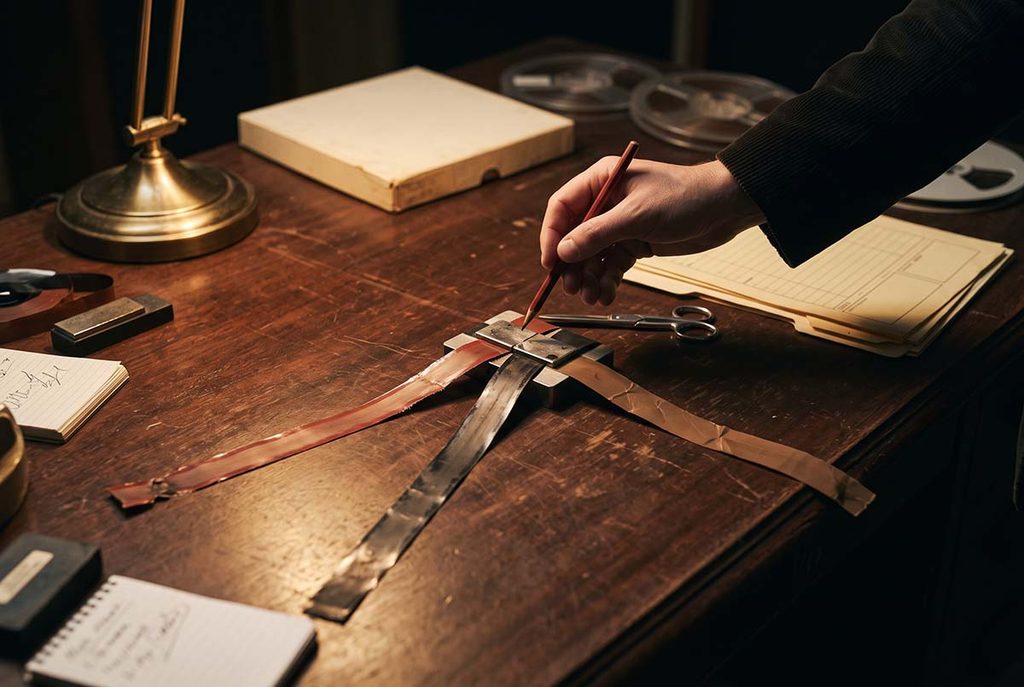
Douglas removed selected bass, drum, and secondary guitar performances from the surviving multitrack material. Billy Cox’s bass was wiped from the working master. Rocky Isaac’s drum performance was removed. The altered tape no longer preserved the evidence of how those musicians had responded to Hendrix in real time.
The methodology went beyond overdubbing. Douglas first made the tape hollow, then filled the space with something he considered more marketable.
New York session musicians were hired to rebuild the missing framework. Bassist Bob Babbitt and drummer Allan Schwartzberg were experienced, highly capable professionals. Babbitt had played within the Motown studio system, one of the most demanding and culturally significant recording environments in American popular music. Schwartzberg was a versatile New York drummer whose professional history crossed jazz, rock, pop, and studio production.
Their skill did not resolve the ethical problem because ability was never the relevant question. They were being asked to enter a musical event six years after it occurred, follow surviving Hendrix performances isolated from part of their original context, and manufacture a new interaction around them. The new assignment required precision. The original archive had contained relationship.
Hendrix’s timing could breathe. His arrangements shifted as sessions developed, and his performances often depended on musicians who understood when to follow, when to resist, and when to leave instability untouched. A replacement player could hear the surviving guitar and vocal tracks, but hearing an isolated performance could not reproduce participation in the decisions that created it.
The original micro-timing documented musicians navigating Hendrix while the music happened. Once those performances were removed, the archive no longer preserved that interaction. It preserved Hendrix as a marketable fragment surrounded by a producer’s later judgment.
Douglas destroyed more than a rhythm track. He destroyed evidence of how particular musicians reacted to Hendrix in a particular room at a particular moment. No later performer, however accomplished, could recreate that fact.
The Most Indefensible Three Minutes in the Archive
The removal of Billy Cox carries significance beyond one title track. Cox had known Hendrix since their Army days, played with him before fame, and returned during the final phase of Hendrix’s career. Their musical relationship preceded the Experience and survived its collapse.
Buddy Miles occupied a different but equally consequential position. Together with Hendrix and Cox, he formed Band of Gypsys, the all-Black trio Hendrix assembled after the original Experience lineup dissolved. The group moved funk, soul, R&B, and Black American rhythmic language closer to the center of Hendrix’s music.
That direction was deliberate. Band of Gypsys was the final working group Hendrix personally chose, and the lineup represented more than a temporary genre experiment. Removing Cox and Miles from recordings associated with that period could therefore carry a cultural effect even without evidence that Douglas acted from explicit racial animus. The archive became less representative of the relationships Hendrix had selected during his final years.
The investigation becomes stranger with “Captain Coconut.” Jimi Hendrix never composed a unified song under that title, nor did he record a complete performance that carried that name. The released recording was constructed from unrelated archival material edited into the shape of a new piece after his death.
Performances created at different moments were joined together and presented beneath a title Hendrix had never approved. The source material included tape marked “MLK,” which Douglas interpreted as a reference to Martin Luther King Jr. The notation did not establish the existence of an authorized Hendrix composition with that subject or title. It was working archive language attached to edited material.
Douglas added overdubs and received a co-writing credit on the released construction. The person controlling the archive had moved beyond selecting, editing, or modernizing Hendrix’s work. He had participated in creating a new compositional object and claimed authorship within a product marketed principally under Hendrix’s name.
Douglas added overdubs, filed the title, and claimed publishing credit on a track the credited artist never wrote, never recorded as a unified composition, and never authorized. Control of unfinished material had become a financial and authorial claim against the estate of a dead musician.
The destruction of context made that claim possible. Once fragments could be detached from their original sessions, renamed, and reorganized, the archive stopped functioning as a record of Hendrix’s decisions. It became a supply of Hendrix components.
The resulting album replaced musical conversation with a producer’s synthetic monologue. Hendrix remained audible, but someone else had selected, removed, and rebuilt the relationships surrounding him.
The Formula That Ran for Two Decades
Crash Landing arrived in March 1975 and performed strongly. It reached an audience still eager for new Hendrix material and demonstrated that the archive could remain commercially productive years after the artist’s death. By the standards governing the project, the album worked.
The liner notes undid it.
Listeners discovered that newly recorded backing parts had been added by musicians who had not participated in the original sessions. Critics and Hendrix devotees could identify what had changed because the removed performers were established participants in Hendrix’s documented musical history. Billy Cox, Buddy Miles, Mitch Mitchell, Noel Redding, and other collaborators were not anonymous names attached to disposable studio labor.
The album’s credits made the reconstruction visible. What Douglas had executed privately in the studio entered the public record, and reviewers began examining Crash Landing as a manufactured posthumous production rather than a straightforward release of previously unheard Hendrix performances.
The backlash did not stop Douglas from repeating the approach. Midnight Lightning, released later in 1975, again used newly recorded session performances to reconstruct unfinished material. The personnel and alterations differed from track to track, so the two albums cannot be reduced to one identical act. The underlying formula remained recognizable: retain the commercially indispensable Hendrix material, remove or replace what was considered unsuitable, construct a contemporary backing, and release the result as another Hendrix album.
The critical response did not improve. The commercial response did not require improvement.
Douglas retained influence over the Hendrix archive for roughly two decades. During that period, the catalog was shaped by a producer whose governing belief placed commercial usability above the integrity of unfinished sessions as historical documents.
Every posthumous archive requires judgment. Unfinished recordings contain contradictions, technical limitations, partial performances, and material the artist may never have intended anyone to hear. The case against Douglas does not depend on portraying every release as worthless or every editorial choice as malicious.
The boundary was crossed when judgment became destruction. Douglas did more than choose among surviving evidence. He altered the evidence itself and removed other people’s contributions from the historical artifact placed under his control.
The Restoration and the Verdict

Control of the Hendrix estate changed during the 1990s. The new custodians began reassessing the catalog and searching for sources that had survived the Douglas-era alterations. Safety copies, rough mixes, alternate reels, and duplicate material made partial reconstruction possible.
The word partial matters. Later archivists could not reverse every decision by reopening an untouched multitrack session. Some original tape information had been physically erased, which meant that more historically faithful releases had to be assembled from whatever copies and alternate sources remained.
In 1997, First Rays of the New Rising Sun attempted to reconstruct the album Hendrix had been developing before his death. The project returned important original performances to the public record where surviving sources permitted and placed the music closer to its historical relationships.
The restoration delivered an evidentiary finding. Douglas had justified his intervention by portraying the original material as sloppy, unreliable, or insufficiently professional. The surviving performances weakened that assessment. Their looseness documented people listening, adjusting, and reacting during an unfinished creative process.
The original recordings were human, which is a different thing from defective.
That distinction is now easier to erase than it was in 1975. Digital tools can isolate a vocal or guitar track, separate stems, correct timing, generate accompaniment, and build an apparently finished production around someone who never heard the result. The technology is new, but the governing decision is familiar.
The original recording becomes raw material. Collaborators become replaceable components, while friction becomes an error awaiting correction. A producer’s judgment, or an algorithm designed to execute that judgment, assumes authority over relationships the artist documented while alive.
The analogy requires precision. Alan Douglas did not create generative artificial intelligence, and his work did not establish a direct technological lineage to contemporary machine-assisted production. The connection lies in the shared logic: isolate the valuable dead artist, optimize the surrounding material, and treat absent consent as a problem that ownership can solve.
The tool has changed. The decision has not.
Legal ownership of a master tape and artistic authority over its contents remain separate questions. A contract may determine who can release a recording, but it cannot establish that the deceased artist intended for chosen collaborators to be erased or for unrelated performances to be joined beneath a new title.
The later archive recovered enough material to reveal what had been lost, but partial survival did not transform destruction into redemption. Safety copies allowed portions of the historical record to return. They could not restore every altered master or retroactively secure Hendrix’s approval.
Douglas did not rescue Hendrix’s music. He erased the people Hendrix chose to make it with, and called that a service.
Frequently Asked Questions
What did Alan Douglas do to Jimi Hendrix’s original recordings?
Alan Douglas removed selected bass, drum, secondary guitar, vocal, and other performances from unfinished Hendrix multitrack tapes. He then hired session musicians to record new parts around the surviving Hendrix material. The degree of alteration differed by track, but the method transformed historical session documents into newly manufactured productions designed for the 1975 market.
Did Alan Douglas erase Billy Cox from the Crash Landing master tape?
The documented record supports that Billy Cox’s bass performance was removed from the working multitrack used for the title track, “Crash Landing.” Drummer Rocky Isaac and other original contributors were also affected on particular recordings. Personnel differed by track, so the case must be described precisely rather than presented as one identical replacement across the entire album.
Who were the replacement musicians on Crash Landing?
Alan Douglas hired accomplished New York session professionals, including bassist Bob Babbitt, drummer Allan Schwartzberg, guitarist Jeff Mironov, percussionist Jimmy Maelen, and backing vocalists Linda November, Vivian Cherry, and Barbara Massey. Their ability was never the central issue. They were being asked to reconstruct musical interactions in which they had not originally participated.
What was Band of Gypsys, and why does its removal matter?
Band of Gypsys was the all-Black trio formed by Jimi Hendrix with bassist Billy Cox and drummer Buddy Miles after the original Experience lineup dissolved. The group reflected Hendrix’s movement toward funk, soul, R&B, and Black American rhythmic traditions. Removing those musicians carried cultural significance even without proof that Douglas acted from explicit racial animus.
What is “Captain Coconut,” and did Hendrix write it?
“Captain Coconut” was not a unified composition written and recorded by Jimi Hendrix under that title. It was assembled after his death from unrelated archival performances and additional overdubs. Alan Douglas gave the construction a title and received a co-writing credit, converting control of disconnected tape fragments into an authorial and financial claim.
Was Crash Landing restored after the Hendrix estate regained control?
Later custodians recovered more historically faithful versions by using safety copies, rough mixes, alternate takes, and duplicate reels that survived the original alterations. The 1997 release First Rays of the New Rising Sun returned important original performances to the public record. The restoration remained partial because some multitrack information had already been erased.
Is the verdict against Alan Douglas completely settled?
The central factual and ethical finding is strong. Douglas knowingly removed original performances, added replacement musicians, and commercially released the reconstructed material. His motive, the degree of racial intent, whether every alteration was irreversible, and whether later archival releases restored everything that had been lost remain contested.
What does the Crash Landing case reveal about posthumous music?
The case demonstrates that legal control of a master tape does not automatically provide artistic authority over its meaning. An archive can preserve history, but it can also revise history from inside the recording itself. The same tension appears when digital tools or artificial intelligence are used to complete work that deceased artists never approved.