Episode 3: Sacred Space and the Uncontrollable Body – Medieval Church Regulation of Music and Dance
This is Episode 3 of Music and the Moral Panic, examining why medieval ecclesiastical authorities repeatedly regulated churchyard dancing, communal song, games, sexual conduct, and other bodily activity on consecrated ground. The surviving evidence doesn’t support a universal medieval Christian prohibition against dance. English statutes document increasingly specific restrictions, while pilgrimage devotion and the Pilota ritual at Auxerre show Christian institutions sanctioning collective and clerical movement in other settings. The distinction that survives the contradiction is jurisdiction: ecclesiastical authorities claimed the power to decide when bodily movement counted as legitimate devotion and when it counted as profanation.
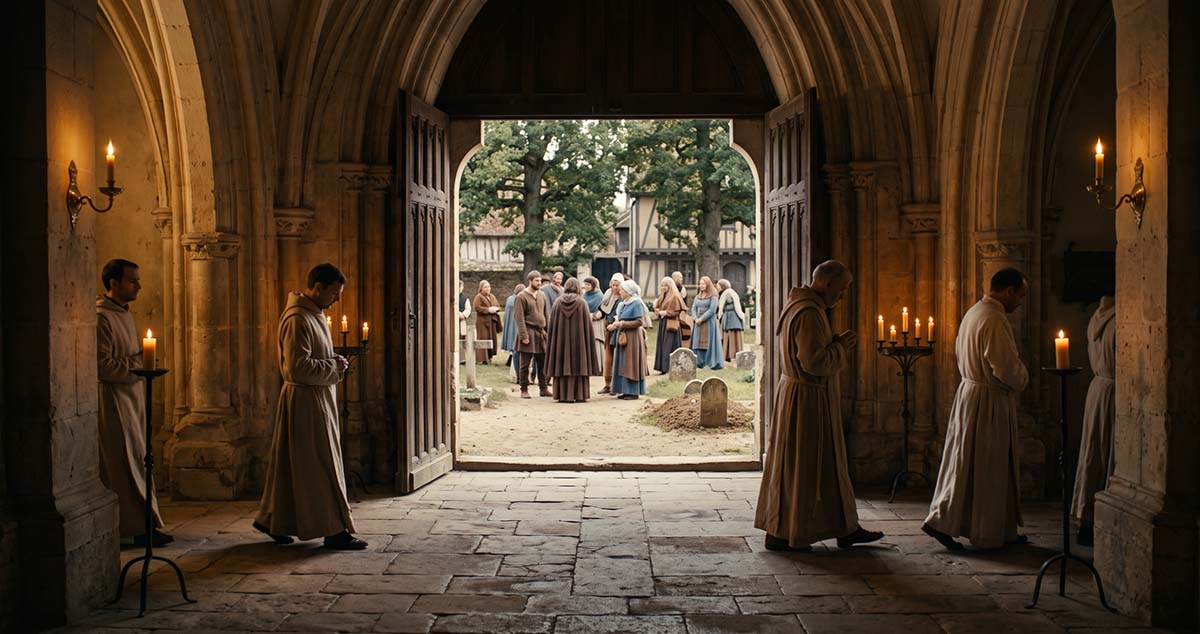
A medieval churchyard could hold graves, parish gatherings, feast-day celebrations, conversations, courtship, song, games, and dancing on the same patch of consecrated earth. Modern cemeteries encourage us to imagine burial grounds as quiet spaces separated from ordinary social life. The medieval parish offered no such clean division. People lived around the church, worshipped there, buried their dead there, crossed its grounds daily, and carried the rest of human life with them.
That made the churchyard more than a backdrop to religious authority. It became one of the places where authority had to prove what it could actually govern.
Episode 2 followed early Christianity as it competed with older ritual worlds for control of festivals, calendars, communal pleasure, and religious identity. By the medieval period, Christianity had largely won that institutional contest in Western Europe. The old problem had not disappeared. It had moved inside Christian society itself.
The Churchyard Was Not Quiet
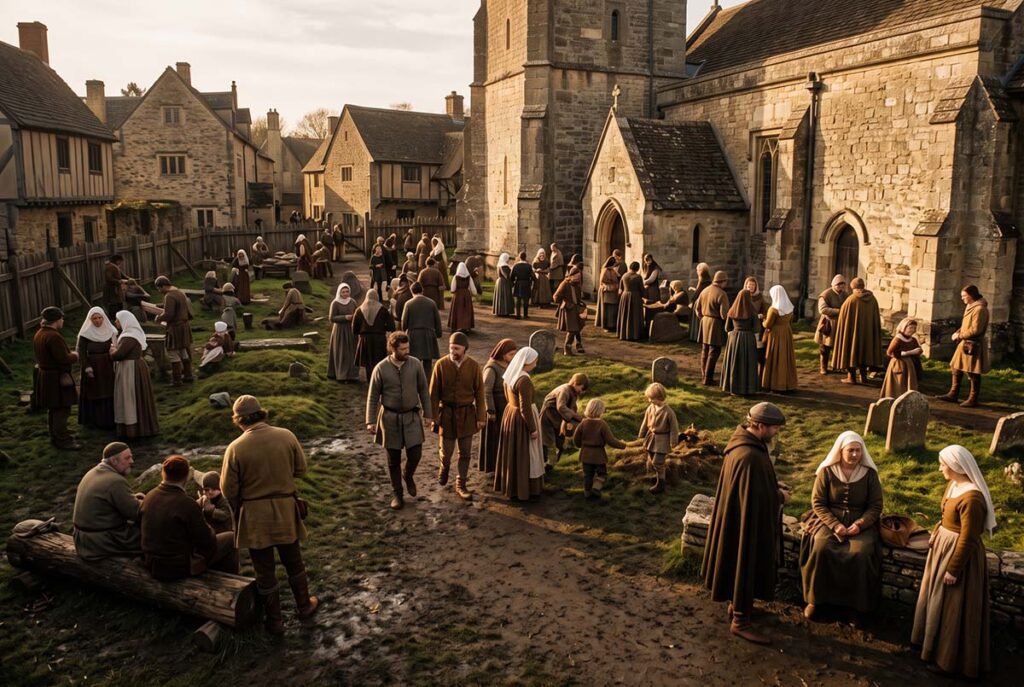
Thirteenth-century English ecclesiastical legislation makes the conflict unusually visible. Canterbury statutes from 1213 or 1214 prohibited dancing and dishonorable games associated with lasciviousness. Hereford legislation from roughly 1225 to 1230 addressed sexual behavior within cemetery precincts. Winchester regulations later prohibited games and lascivious practices there, while Wells statutes linked improper singing and games in churchyards with demonic sacrifice. (Legal History Miscellany)
These rules regulated more than isolated acts of misconduct. They classified the churchyard itself. A space that parishioners used as part of communal life was also consecrated ground, and ecclesiastical authorities claimed special jurisdiction over what happened inside it.
Repeated regulation doesn’t tell us that medieval bishops pursued one coordinated continental campaign. Medieval authority was too fragmented for that. Bishops, parish clergy, monasteries, local patrons, civic authorities, and customary practice overlapped in ways that differed from place to place. What the surviving statutes do establish is repeated institutional concern over the use of sacred ground.
That concern matters because churchyards sat at the center of communities. A rule against dancing in such a place wasn’t simply a rule about choreography. It entered the social geography of the parish and asked who could determine how the community used one of its most important shared spaces.
The Body Out of Rational Control
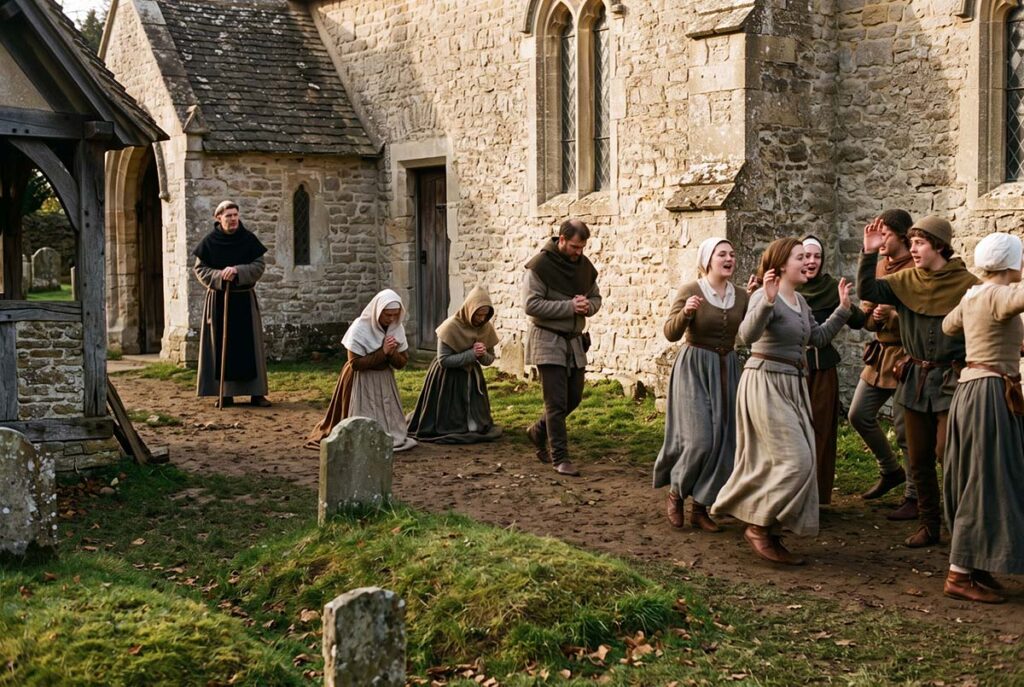
Medieval clerical writers also interpreted bodily movement through a moral and theological vocabulary. Excessive or uncontrolled movement could become evidence of interior disorder. The moving body didn’t merely occupy space. It could be read.
One useful distinction concerned forms of bodily expression that modern readers might flatten into the single category of gesture. Controlled, meaningful movement could signify discipline and spiritual order. Movement perceived as excessive or uncontrolled could be described very differently, particularly when communal rhythm and festivity appeared to loosen ordinary restraint.
That logic gave physical behavior theological weight. Movement could become a sign before the dancer had said anything at all.
Communal singing intensified the problem. Song, rhythm, touch, and collective movement could make popular celebration look uncomfortably like ritual, especially when it happened beside graves or within other consecrated precincts. The issue wasn’t simply whether people were enjoying themselves. The harder question was whether a community could generate its own meaningful religious experience without clerical direction.
Medieval Christianity itself makes a blanket hostility to the body difficult to sustain. Its worship depended on bodily practices: kneeling, procession, pilgrimage, prostration, gesture, physical penance, touching relics, carrying sacred objects, and moving through ritual space. The body could be disciplined, directed, and sanctified. That makes the condemned body more historically interesting.
The Round Dance as Counter-Liturgy
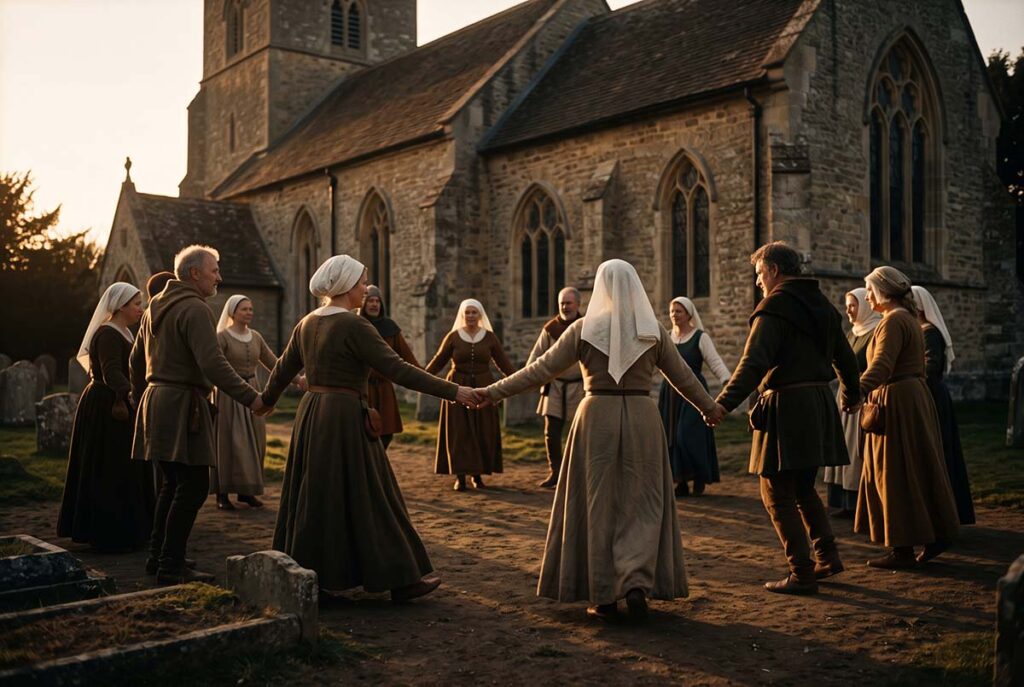
The chorea brought several clerical anxieties together in one formation. Participants could join hands in a circular dance, linking bodies through touch and rhythm. Such movement could serve celebration, fellowship, courtship, or local custom. Moralists could see something else.
Joined hands collapsed distance. Men and women could move together. Individual bodies became a collective body. Repetition and rhythm created an experience whose meaning emerged from participation rather than instruction.
Some religious writers pushed the imagery further by associating the dancing ring with demonic inversion. A circle of linked dancers could be imagined as a kind of false liturgy, an ordered communal ritual directed toward the wrong spiritual center.
The theological language did important institutional work. Once unauthorized celebration could be classified as spiritual contamination, authorities no longer had to treat it as merely a competing version of communal devotion. It entered a category already defined as illegitimate.
The devil at the center of the round dance was also a claim on the perimeter.
What Pilgrims Were Allowed to Feel
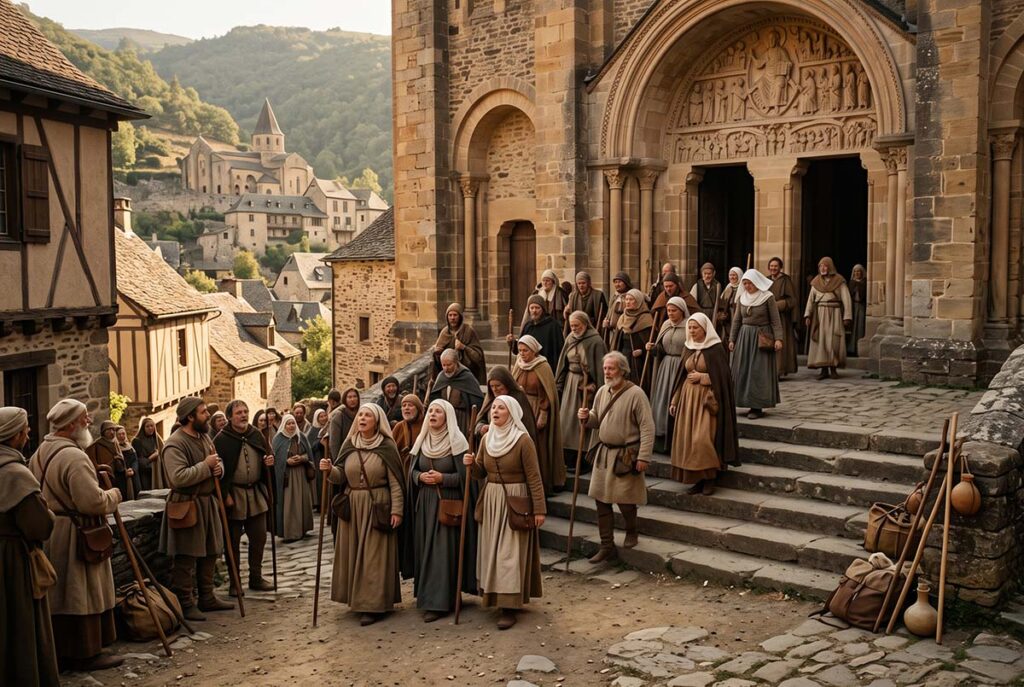
The pilgrimage culture surrounding Sainte-Foy at Conques complicates the story. The abbey church was a major medieval pilgrimage destination, and devotion there placed bodies in motion by definition. Pilgrims traveled, gathered, sang, approached the saint’s reliquary, and entered an intensely physical devotional environment. (Khan Academy)
Christian worship had therefore found ways to make movement sacred. The pilgrim’s body didn’t become suspect merely because it moved collectively or expressed emotion. The route had an authorized destination. The devotional structure was institutionally intelligible. The movement belonged inside a recognized Christian framework.
Medieval theological distinctions around gesture worked in much the same way. A controlled body could represent inner order. Purposeful movement could embody discipline rather than its absence.
The significant line wasn’t between movement and stillness. It ran between different classifications of movement.
That distinction changes the churchyard prohibitions. If Christian institutions could authorize pilgrimage movement, bodily devotion, processions, and other physical practices, then dancing can’t have been rejected simply because the human body was in motion. Some other variable was doing the work.
The Clergy Who Also Danced
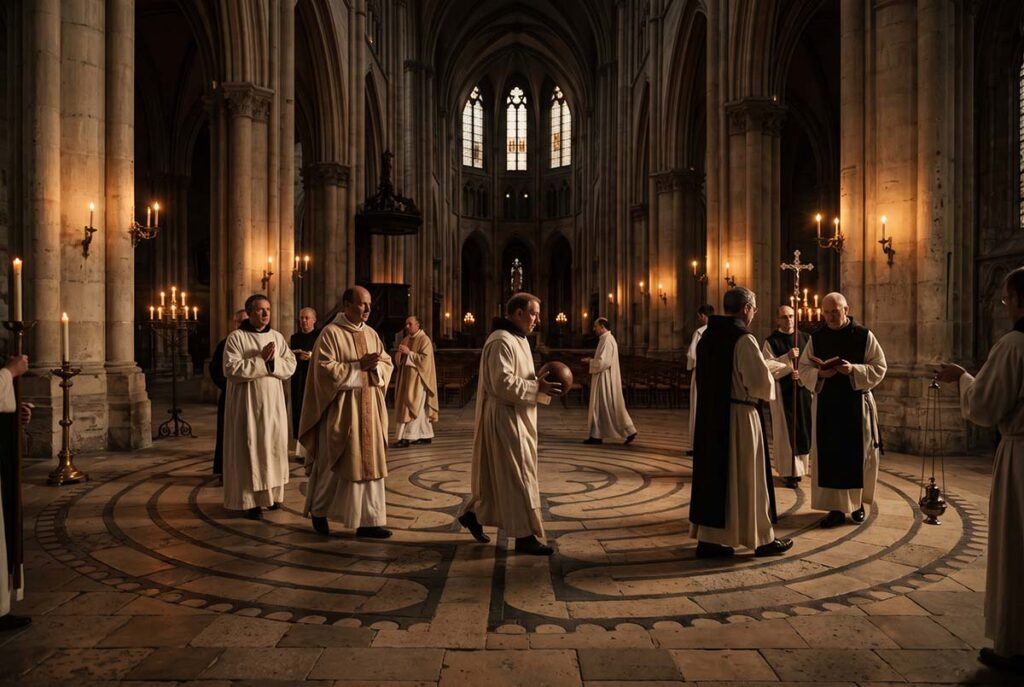
Auxerre Cathedral brings that variable into view.
Medieval records describe an Easter Monday ritual known as the Pilota, performed in connection with the cathedral labyrinth. Clergy gathered for the observance, sang the Easter sequence Victimae paschali laudes, moved rhythmically around the labyrinth, and tossed a large ball as part of the rite. Accounts identify the dean and canons among the participants. (sibetrans.com)
Nothing about the movement existed outside Christianity. It happened inside a cathedral, during the Easter season, under clerical organization, using a ritual whose meaning had been absorbed into the sacred calendar.
Now place Auxerre beside the English churchyard statutes.
Lay dancing on consecrated ground could be condemned as disorderly or spiritually dangerous. Clerical rhythmic movement on cathedral stone could become part of Easter observance. The human capacity for movement remained. What changed was the authority surrounding it.
That contradiction is the turning point. Once prohibited and authorized movement coexist inside the same religious culture, morality alone can’t explain the record. The institutional setting begins to matter more than the physical act.
Permission changed meaning.
Four Centuries of Losing
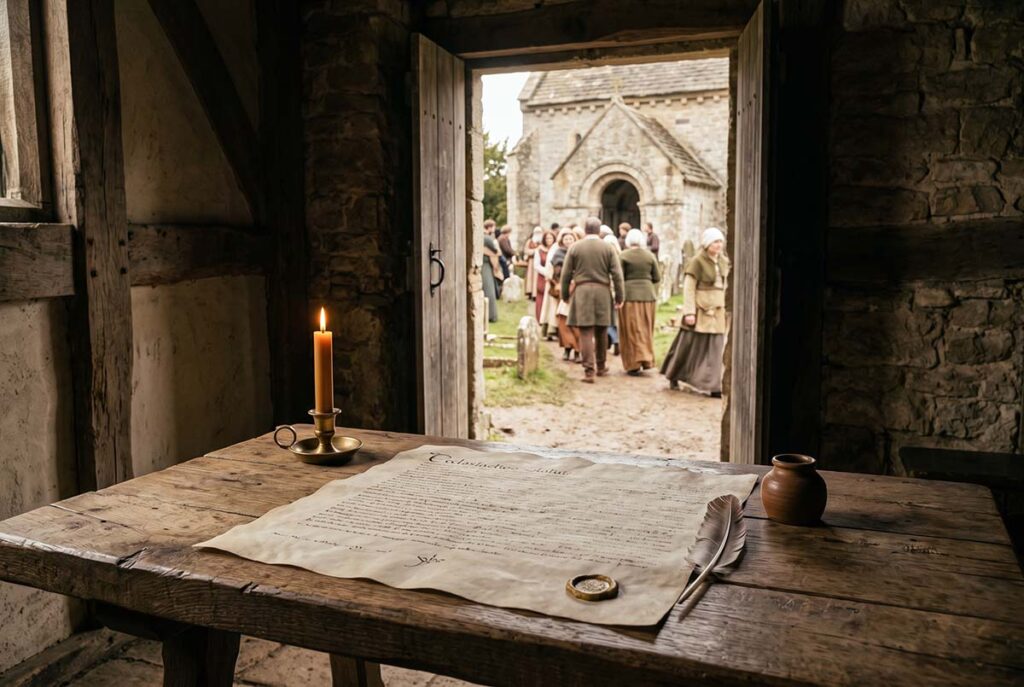
Repeated prohibitions create another problem for the idea of straightforward suppression. One statute establishes a rule. A series of comparable restrictions issued across generations can also suggest that the prohibited behavior continued.
A successful ban eventually makes itself less necessary. A recurring ban leaves behind evidence that the institution was still confronting the practice.
That inference requires care. Medieval Europe didn’t possess one centralized ecclesiastical administration executing an identical policy across four centuries. Local circumstances varied, and later regulations don’t automatically prove that earlier ones failed in exactly the same place for exactly the same reason.
Even with that qualification, the pattern is difficult to ignore. Dancing, singing, games, courtship, mourning, gathering, and festival custom continued to press against ecclesiastical definitions of sacred space. Rules had to be renewed because communities kept bringing ordinary human life into territory the institution considered consecrated.
The institution also possessed another option: incorporation.
A practice could be redirected, ritualized, licensed, or given an authorized devotional setting. Pilgrimage movement demonstrates one possibility. Auxerre demonstrates another. Control didn’t always require eliminating a behavior. It could mean determining which version of that behavior counted as legitimate.
The medieval church building made the distinction physical. Stone walls and thresholds separated altar space from the churchyard outside, yet the same people inhabited both worlds. Architecture could mark jurisdiction. It couldn’t prevent human needs, customs, and pleasures from crossing the conceptual boundary.
The written rule survived. So did the dance.
Verdict
The medieval regulation of popular dancing is easy to describe as religious prudishness. Clerical condemnations of lust, disorder, profanation, and demonic influence seem to support that interpretation until the rest of medieval Christian bodily practice enters the frame.
Pilgrims moved. Worshippers processed. Bodies knelt, gestured, touched relics, and enacted ritual. At Auxerre, clergy danced and played ball across a cathedral labyrinth as part of Easter observance. The same religious culture that restricted one kind of movement could sanctify another.
The difference lay in authorization.
Ecclesiastical authority claimed the right to determine which experiences counted as sacred, which uses of consecrated ground counted as legitimate devotion, and which forms of collective bodily expression crossed into profanation. The medieval Church never possessed complete control over that boundary. The recurring legislation is part of the evidence.
The Church did not decide that dancing was sinful. It decided that dancing without permission was. The difference is jurisdiction, and jurisdiction was always the argument.
That distinction carries the series into its next conflict. Episode 2 showed Christianity competing against rival ritual systems. Episode 3 shows ecclesiastical authority trying to classify behavior inside an already Christian world. Episode 4 moves the dispute deeper still, into the Ars Nova and Carnival, where institutions will confront innovation and transgression produced from within the very tradition they claim the right to define.
The question remains the same even as the cultural form changes: who controls the boundary?
Frequently Asked Questions
Did the medieval Church actually ban dancing?
Medieval ecclesiastical authorities repeatedly prohibited particular forms of dancing in churches, churchyards, cemeteries, and other consecrated spaces, but the evidence doesn’t support a universal Christian ban on dance. Medieval Christians also incorporated movement into pilgrimage, devotion, ritual, and cathedral practice. The historical distinction was more complicated than movement versus stillness.
Why was churchyard dancing such a concern to medieval ecclesiastical authorities?
A medieval churchyard was both consecrated burial ground and a heavily used communal space. Parishioners gathered, sang, played games, marked feast days, courted, mourned, and sometimes danced there. Ecclesiastical legislation asserted that these activities occurred within sacred territory whose legitimate uses bishops and clergy claimed authority to classify and regulate.
What was the chorea in medieval dance culture?
The chorea was a round or circular dance in which participants could join hands and move collectively. Medieval moralists could interpret this physical formation as spiritually dangerous because it combined touch, rhythm, communal pleasure, and sometimes mixed-sex gathering inside sacred space. Some religious literature consequently treated the dance as an inversion of legitimate ritual order.
What is the difference between gesticulation and gestus in this episode?
Gesticulation describes bodily movement interpreted as excessive, uncontrolled, or evidence that rational discipline had failed. Gestus provided a contrasting vocabulary for measured, purposeful movement capable of expressing spiritual order. The distinction matters because medieval Christian thought could condemn one kind of bodily expression while giving positive religious meaning to another.
What happened with pilgrims at Saint Foy in medieval France?
Pilgrims traveling to Sainte-Foy at Conques entered a devotional culture centered on an authorized Christian shrine and reliquary. Collective movement and religious celebration could exist within that pilgrimage world without automatically becoming profane, which complicates the claim that medieval Christianity rejected physical religious expression itself.
What was the Pilota rite at Auxerre Cathedral?
The Pilota was an Easter Monday cathedral ritual at Auxerre in which clergy participated in rhythmic movement, ball play, and sacred song around the cathedral labyrinth. Its importance lies in the contradiction it exposes: ecclesiastical culture capable of condemning unauthorized churchyard dancing could also organize and legitimate bodily movement inside Christian ritual. (sibetrans.com)
What does the medieval evidence actually establish about dancing and Church authority?
The record establishes repeated ecclesiastical regulation without proving a single coordinated campaign against dancing across medieval Europe. Prohibited and authorized movement existed simultaneously. That coexistence makes jurisdiction the stronger explanation: authorities repeatedly attempted to determine which uses of sacred space counted as legitimate devotion and which crossed into disorder or profanation.
How does this conflict lead into the Ars Nova and Carnival?
The next episode asks what happens when disputes over authorization move from popular bodily practice into Christian culture itself. The Ars Nova introduced musical innovation within sacred tradition, while Carnival created tolerated periods of inversion and disorder. Together they raise a related question: why can institutions permit transgression when they retain authority over its boundaries?