Episode 2: Competing Altars: Early Christianity and the War Over Ritual Life (2nd–5th centuries CE)
This is Episode 2 of Music and the Moral Panic, tracing how early Christianity confronted a Roman ritual world in which spectacle, festivals, civic identity, religion, and collective pleasure were deeply entangled. Tertullian and Augustine established boundaries around participation, while the Synod of Laodicea shows Christian discipline reaching into weddings, dancing, and theatrical entertainment. The Turning Point came with Theodosian legislation in 391–392 CE, when arguments once directed toward Christian abstention entered a political order capable of legally restricting traditional ritual practice. Christianity had moved from separating its followers from rival ritual life toward possessing institutional power over legitimate sacred time and public observance.
The World Being Contested
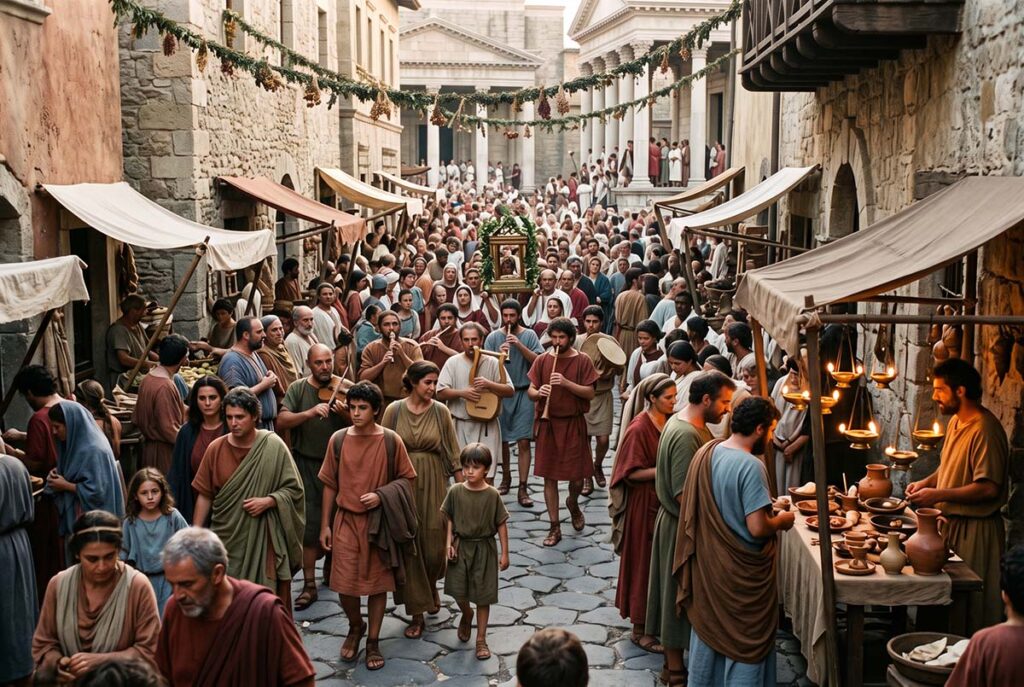
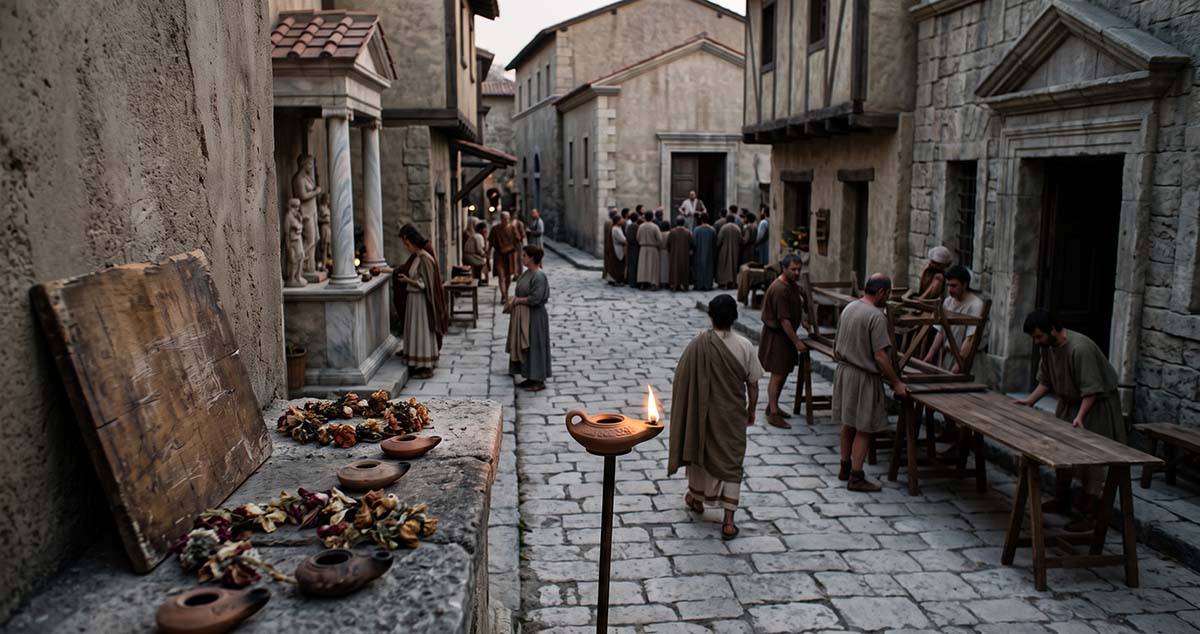
Walk through a major Roman city in the second century CE and the crowd tells you where the city is alive. People move toward arenas, theaters, processions, public sacrifices, games, and festivals embedded in the rhythms of civic life. These activities don’t belong to a separate cultural category called entertainment. Public religion and collective pleasure meet in the same places, often on the same days, before the same assembled population.
The scale matters because Roman spectacle carried civic and religious meaning together. Public calendars organized recurring moments when communities assembled, while ceremonies and festivals connected those gatherings to inherited traditions and divine favor. A citizen could encounter the religious order of the city without entering a temple. The timetable of public life itself carried sacred meaning.
Episode 1 began with Plato’s claim that music could shape character and therefore become a legitimate concern of political authority. Early Christianity encountered a related problem from another direction. The question was no longer simply what sound might do to an individual citizen. It was what repeated communal experience could do to an entire population.
Christianity entered a world that already knew when to gather, when to mourn, when to celebrate, when to feast, and which occasions deserved collective memory. The civic calendar and the religious calendar overlapped so thoroughly that participation in ordinary public life could repeatedly cross into rival ritual. Establishing a distinct Christian community therefore required more than persuading people to accept different propositions about God. It required boundaries around participation itself.
The Theologians Make Their Argument
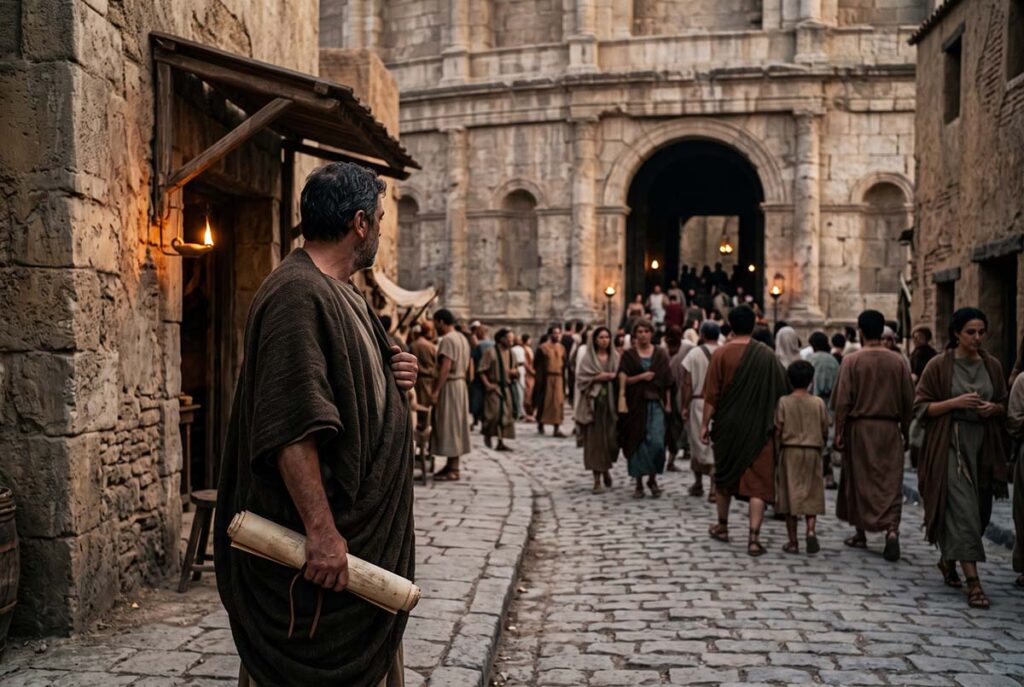
Around 200 CE, Tertullian treated Roman spectacles as a problem of allegiance. In De Spectaculis, he connected the circus, theater, amphitheater, and public games to idolatry and to religious traditions associated with Roman deities. His objection concerned their origins, settings, and ritual associations. A Christian could enter an entertainment and, in Tertullian’s account, enter the religious world attached to it at the same time.
That distinction widened the field of religious competition. A spectacle didn’t have to preach pagan theology to matter. It could draw bodies into an inherited communal experience whose symbols, calendar, and sacred associations belonged to another order. The arena could therefore become religiously consequential without functioning as a temple.
Augustine supplied a different mechanism. Remembering the theaters of Carthage, he examined the peculiar power of staged suffering to produce genuine feeling in spectators. Theater mattered because it acted upon emotion, giving people experiences of sympathy, appetite, attachment, and pleasure through repeated spectatorship.
The problem was the effectiveness of the experience. Roman ritual culture already knew how to gather a population, move its emotions, and make communal habits feel natural through repetition. Christian authorities weren’t confronting an inert collection of old beliefs. They were confronting practices people continued to want.
The Problem the Argument Could Not Solve
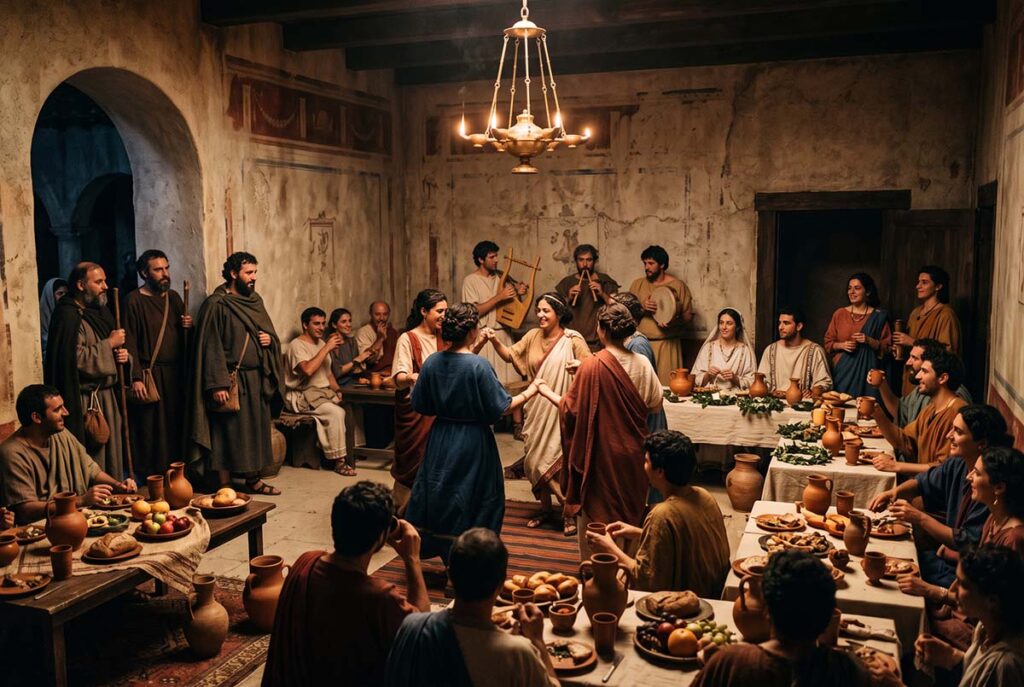
Christian theology could establish boundaries, but boundaries didn’t automatically reorganize ordinary life. By the second half of the fourth century, Christian discipline was reaching into weddings and other social occasions precisely because inherited festive behavior had survived conversion. The Synod of Laodicea addressed dancing at wedding celebrations and required clergy to leave before dramatic entertainment began. Such rules make persistence visible: Christians were still participating.
The Chronograph of 354 reveals the overlap from another angle. Traditional holidays, civic games, and Christian commemorations inhabited the same calendrical environment. Conversion didn’t remove a person from Roman society, and it certainly didn’t erase the inherited rhythms of the city around them. Christian communities remained materially and socially continuous with the culture in which they lived.
Ecclesiastical rules therefore reveal both authority and its limits. Councils legislated because behavior hadn’t disappeared. Customs survived, changed, mixed with new religious expectations, or simply continued despite repeated objections. The Church was sharing a calendar with the Roman world, and the Roman world had centuries of habit behind it.
That persistence prevents the story from becoming one of effortless Christian triumph. Pastoral discipline could tell committed believers what ecclesiastical authorities expected of them. It couldn’t erase the accumulated festive life of a civilization simply by declaring it religiously suspect.
The State Enters the Room
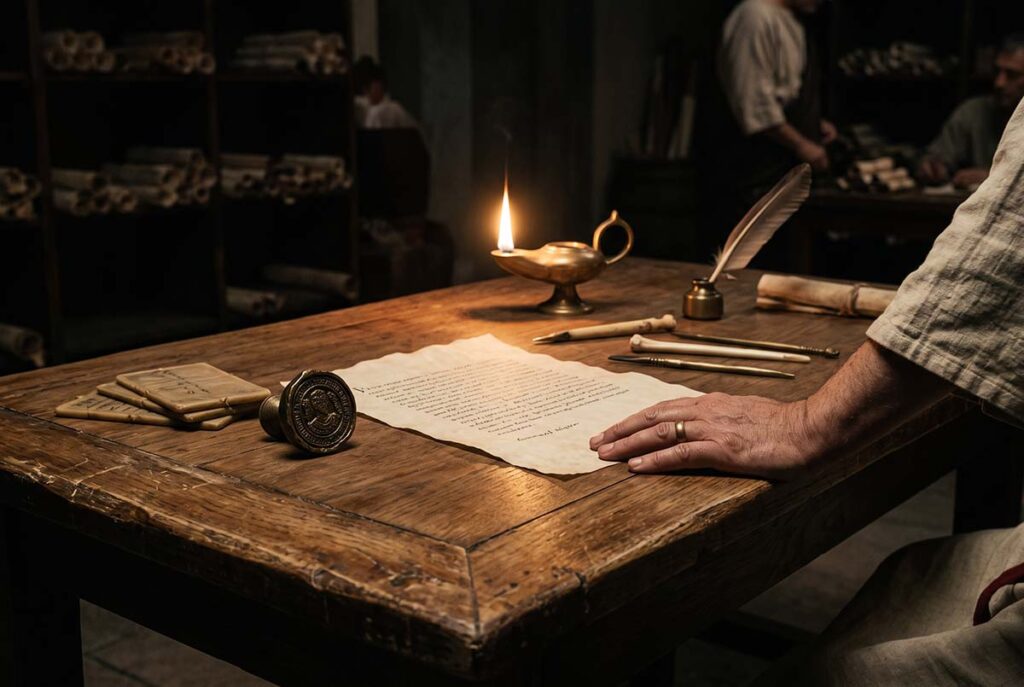
Between 391 and 392 CE, the institutional setting changed. Imperial legislation associated with Theodosius and his colleagues placed increasingly severe restrictions on sacrifice and traditional cult observance. The decisive development was the machinery now available to act on those religious boundaries. Exhortation had asked Christians to abstain. Imperial law could restrict practices themselves.
Earlier Christian writers make the ideological conflict visible. Councils show ecclesiastical discipline reaching into communal behavior. The late fourth-century imperial turn marks another level of authority because Christian religious norms now existed inside a political order capable of coercive restriction.
Tertullian around 200 CE couldn’t suppress Roman public religion across the empire. He was instructing a minority community about separation from practices he considered idolatrous. By the end of the fourth century, Christian norms occupied a radically different political environment, one in which imperial authority could act against inherited cult practice.
Before 391, the Church argued against the body’s pleasures. After 391, it inherited the power to punish them. The change was institutional. An argument about allegiance had acquired the machinery of law.
The Calendar as Weapon
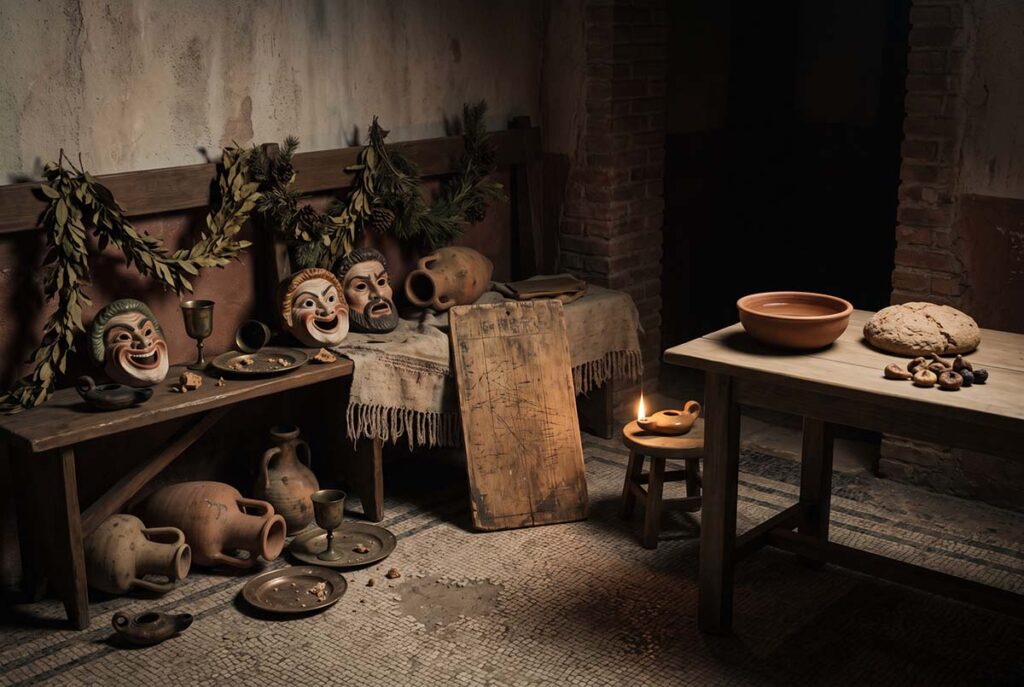
A calendar brings institutional authority into ordinary life. It tells communities when to stop working, when to gather, when to fast, when to feast, when to mourn, and which events deserve repetition and memory. Law codes and theological treatises can remain distant from daily experience. Sacred time returns every year.
The Kalends of January shows why this mattered. New Year observances carried feasting, masquerade, public celebration, and inherited customs that Christian authorities repeatedly confronted. Later Christian responses placed penitential practices and fasting against festive expectations associated with the same seasonal period. What a person did with a particular day could therefore become an expression of allegiance.
The opposition between feast and fast makes the mechanism unusually clear. One ritual tradition assigns a period to celebration, release, and collective pleasure. Another gives the period religious meaning through restraint, penitence, and different forms of gathering. The argument is enacted through bodies following rival schedules.
This process shouldn’t be mistaken for instantaneous cultural replacement. Older practices persisted, sometimes for generations, and the existence of repeated prohibitions proves that institutions couldn’t simply command them out of existence. The consequential shift was that Christian authority increasingly possessed the capacity to determine which observances received legitimacy and which recurring practices would organize Christian communal life.
Whoever owns the feast day owns something larger than a date. Repeated experience becomes memory, and memory becomes part of what a community understands itself to be.
Verdict
The centuries covered here don’t reveal one unchanged institution executing a master plan. They show a movement whose position changes dramatically. Christian writers begin by drawing boundaries around participation. Councils extend those boundaries into ordinary social conduct. Later imperial authority gives Christianized political institutions coercive power over parts of traditional ritual life.
That progression changes the meaning of the conflict. No Roman circus song had to be prohibited by title for the ritual environment around it to lose public legitimacy. Authority could operate through gathering places, calendars, legal permissions, and recurring communal habits. The crucial change was the ability to establish which ritual order received institutional backing.
The early Church began as a minority defining separation from dominant Roman ritual life. It eventually operated within an order increasingly capable of deciding which observances were legitimate, which traditional practices could continue legally, and how Christian sacred time would organize communal experience. The mechanism reached further than ordinary censorship because it acted on the conditions under which collective ritual remained possible.
They did not silence the festival. They replaced it and called the replacement sacred.
Episode 3 carries that struggle into medieval sacred space. Once Christianity possesses the churchyard, feast day, and local religious calendar, the problem changes again. Dancing, noisy celebration, and participatory worship now emerge inside territory the institution already considers its own, forcing clerical authority to confront a familiar difficulty: the community’s body remains harder to govern than its doctrine.
Frequently Asked Questions
What did early Christianity actually establish about Roman ritual life?
Early Christianity established boundaries around participation in a Roman world where religion, spectacle, festivals, civic identity, and communal pleasure overlapped. Christian writers first urged believers to withdraw from rival ritual environments. By the late fourth century, Christian religious norms existed inside a political order capable of legally restricting parts of traditional ritual practice.
Why did Tertullian oppose Roman spectacles?
Around 200 CE, Tertullian treated the circus, theater, amphitheater, and public games as problems of religious allegiance. In De Spectaculis, he connected these entertainments to idolatrous origins and Roman religious traditions. A Christian entering a spectacle could therefore participate in the ritual system surrounding it without entering a temple.
What did Augustine of Hippo add to the Christian argument about theater?
Augustine focused on the emotional power of spectatorship. Recalling the theaters of Carthage, he examined how staged suffering could produce genuine feeling in an audience. His account made theater significant because spectacle could shape sympathy, appetite, attachment, and pleasure through repeated emotional experience.
What did the Synod of Laodicea regulate?
The Synod of Laodicea regulated Christian conduct within ordinary social life, including wedding celebrations. Its canons addressed dancing and required clergy to leave before dramatic entertainment began. Those rules show that conversion hadn’t erased inherited festive behavior. Christians were still negotiating boundaries between communal custom and ecclesiastical expectations.
Why were the Theodosian laws of 391–392 CE the Turning Point?
The laws mark a change in institutional position. Earlier Christian writers could condemn participation, while councils could discipline Christian communities. By 391–392 CE, imperial authority could legally restrict sacrifice and traditional cult observance, giving the religious conflict a coercive political mechanism.
Why did the calendar matter so much to early Christian ritual authority?
A calendar organizes repeated behavior. It determines when communities gather, feast, fast, mourn, celebrate, and remember. Conflicts surrounding observances such as the Kalends of January therefore reached beyond abstract belief. Sacred time became a practical contest over which recurring experiences would receive religious legitimacy and structure communal life.
Was the early Christian conflict with pagan ritual simply censorship?
The record shows a broader institutional transformation. Early Christian writers first sought separation from practices they considered religiously illegitimate. Councils later regulated Christian participation, while imperial government eventually possessed coercive authority over traditional cult practices. By controlling legitimate ritual environments and sacred time, institutional authority could reshape communal life without banning individual pieces of music by title.
How did this struggle over ritual authority continue into the medieval period?
Episode 3 follows the conflict into medieval sacred space, where church authorities repeatedly confronted dancing and participatory festivity around churchyards, feast days, and saints’ celebrations. The question shifts from competition between large ritual systems toward control over embodied religious practice inside spaces Christianity already claims as its own.