Episode 4: Licensed Disorder – Carnival, the Ars Nova, and the Limits of Permitted Rebellion
Pope John XXII’s confrontation with Ars Nova in the fourteenth century was fundamentally a struggle over authority inside worship. Docta Sanctorum Patrum condemned particular rhythmic and polyphonic practices rather than polyphony as a whole, while permitting limited consonance when the inherited chant remained intact. Carnival and the Feast of Fools reveal a more complicated history of temporary ritual inversion that ecclesiastical authorities variously tolerated, defended, regulated, and suppressed. Taken together, the evidence shows an institution drawing its sharpest line when musical innovation threatened to reorganize the ritual system through which sacred authority spoke.
The problem reached Avignon from inside the choir. By 1324, the papal court had become one of the great administrative centers of Western Christianity, and Pope John XXII governed an institution whose authority depended on more than doctrine. Authority also lived in ritual, in the repeated forms through which doctrine became audible and recognizable. Plainchant belonged to that system because melody remained subordinate to the Latin text, carrying the words of worship through sacred space without allowing musical invention to take command.
That arrangement gave musical form an institutional function. Chant wasn’t merely one style available to medieval musicians. It helped preserve an inherited relationship between text, worship, clergy, and congregation. The sacred word occupied the center, while music served as its vehicle.
Then musicians began changing the vehicle.
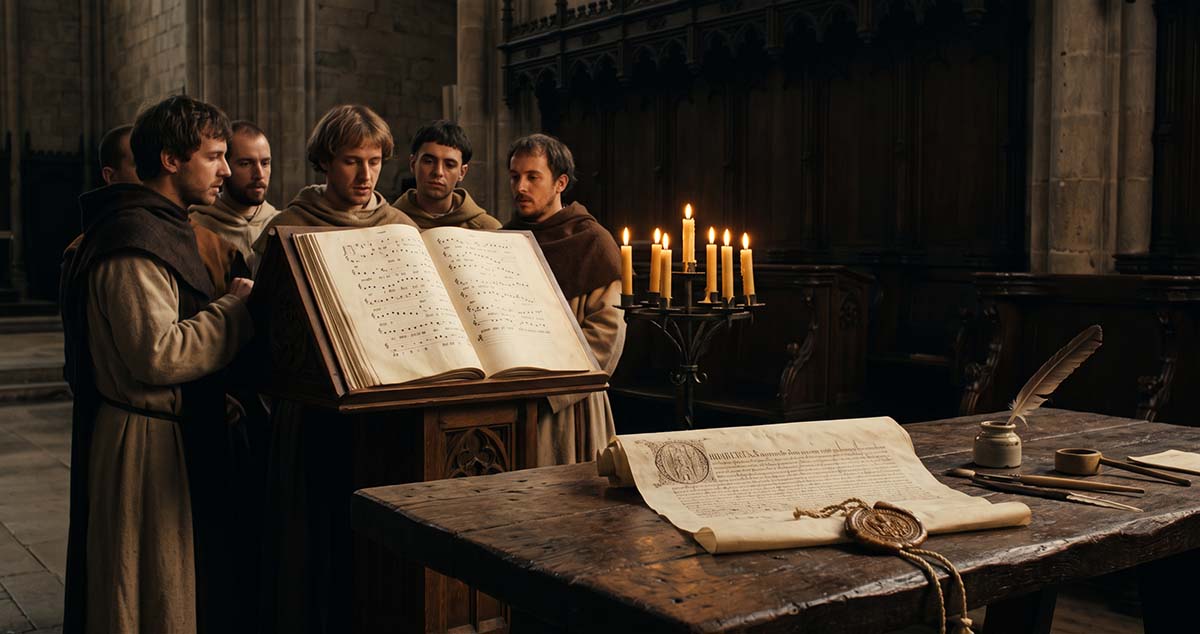
The alterations could appear technical when removed from their setting: smaller note values, increasingly intricate rhythms, coordinated independent voices, and a growing ability to divide musical time with precision. Contemporary ecclesiastical criticism also connected the musical changes to bodily behavior, including rushing, gesture, and forms of performance regarded as immoderate. Inside the choir, technique and discipline were becoming part of the same dispute.
Episode 3 followed practices that clerical prohibition repeatedly failed to eliminate. Dancing, celebration, and locally controlled religious customs could be pushed away from the institution’s preferred sacred spaces and still survive somewhere else. Ars Nova created a harder problem. The disputed practice wasn’t remaining outside the walls. It was developing inside the machinery of worship.
What the Ars Nova Actually Did
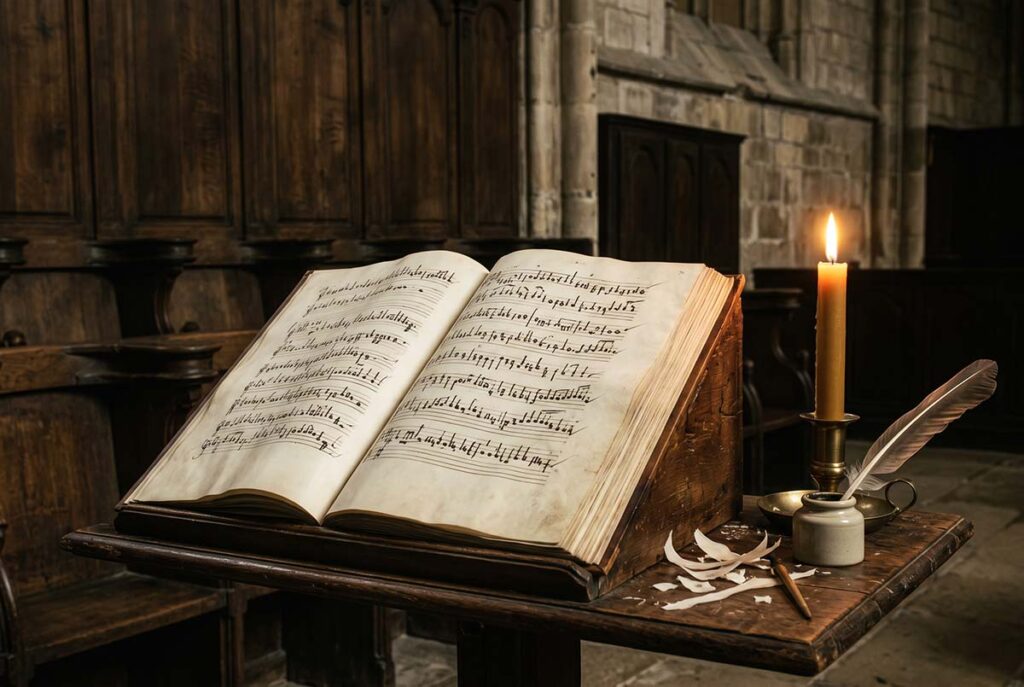
Ars Nova, the New Art, transformed the organization of musical time during the fourteenth century. The theoretical tradition closely associated with Philippe de Vitry gave musicians greater rhythmic flexibility, allowing smaller notational values and more precise subdivisions than earlier systems had easily supported. Different voices could occupy the same span of time while following increasingly independent rhythmic designs.
The result could radically alter the listener’s relationship to an inherited chant. A slow foundational line might continue underneath faster voices moving according to their own logic. Polyphonic texture could become intricate enough that the chant remained physically present while losing its former dominance over attention.
The sacred word could remain inside the composition while the musical structure around it became the experience.
That possibility explains why a technical development could acquire institutional gravity. Ecclesiastical authority flowed partly through texts and through the ritual forms that delivered those texts. Once musicians possessed techniques capable of reorganizing the relationship between text, time, and attention, they were doing more than decorating worship. They had acquired new authority over how worship unfolded.
Complexity itself wasn’t foreign to medieval ecclesiastical culture. Gothic architecture depended on ambitious engineering, geometry, craft, and technical knowledge. Complexity could serve the institution beautifully when it magnified sacred grandeur. The more difficult question was what happened when musical intelligence stood between the institution’s authorized text and the people meant to hear it.
Ars Nova made that question unavoidable.
The Legal Strike
Pope John XXII answered the problem through regulation. Docta Sanctorum Patrum attacked specific practices associated with the musical “new school,” including elaborate rhythmic divisions, hockets, discants, and techniques he believed obscured or distorted inherited chant. It also objected to aspects of performance that John associated with immoderation and the loss of liturgical gravity. The familiar shorthand that a medieval pope simply banned polyphony misses what makes the document historically revealing.
John’s decree eventually makes its boundary explicit. Selected consonances could still be used under limited circumstances, particularly when the underlying chant remained intact. Polyphony therefore remained possible. Musical addition could exist, but the inherited sacred form had to remain recognizable and structurally sovereign.
That exception changes the story. John wasn’t merely choosing old sounds over new ones. The decree specified conditions of entry. Musical invention could embellish the ritual, but the institution reserved the authority to decide when embellishment had begun displacing the thing it was supposed to serve.
Pope John was filing a jurisdictional claim on musical form.
The boundary becomes more revealing precisely because it was narrow. An innovation could remain acceptable while ecclesiastical authority still recognized the structure underneath it. Once new technique altered the relationship between chant and invention, the argument moved from musical preference into institutional territory.
Who decided what sacred music was allowed to become? The decree answered that question by asserting the papacy’s right to decide.
How Machaut Survived
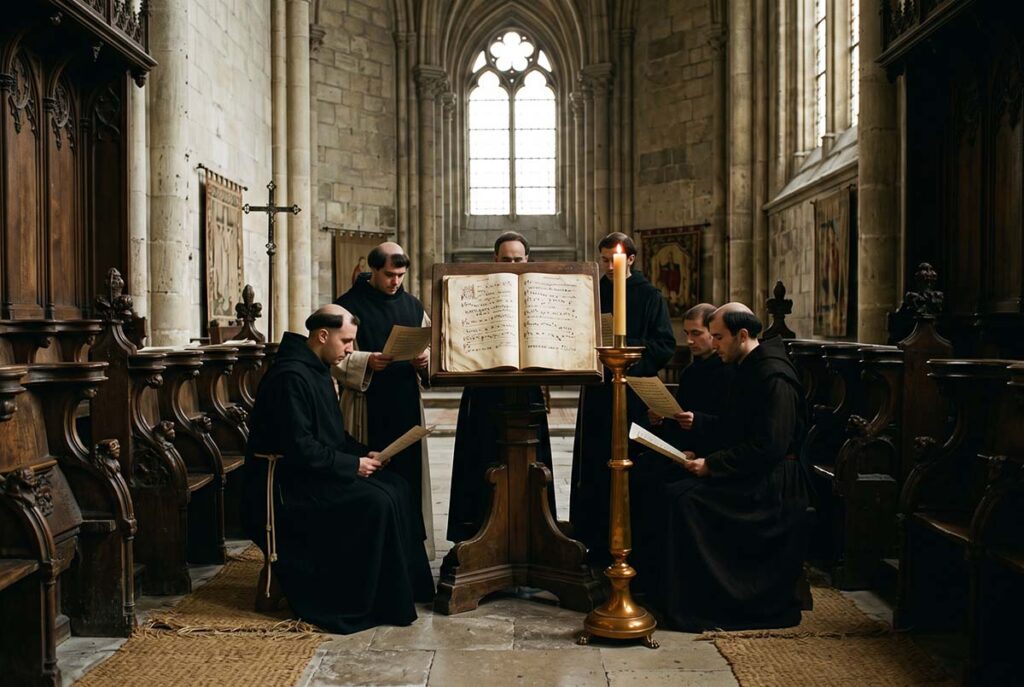
John XXII’s intervention didn’t end Ars Nova. Guillaume de Machaut emerged in the following decades as one of the defining composers of fourteenth-century French music, and sophisticated polyphony continued developing in sacred as well as secular settings. Machaut matters because his career prevents the controversy from collapsing into a simple story in which authority strikes and innovation disappears.
Machaut shouldn’t be turned into a direct combatant against John XXII. The evidence doesn’t support that theatrical confrontation. His later sacred music is more useful as evidence that the new musical language continued to develop after ecclesiastical authorities had attempted to delimit some of its uses.
The survival of complexity also reveals something about institutional absorption. Musical sophistication could inhabit a large devotional structure that the Church understood as monumental rather than merely disruptive. The comparison with Gothic architecture isn’t exact, but it helps explain how technical ambition could become compatible with ecclesiastical grandeur. An institution capable of surrounding worshippers with mathematically ambitious stone and glass had no simple objection to human ingenuity.
The question remained what that ingenuity appeared to serve.
Machaut’s sacred polyphony occupied the terrain that the earlier decree had attempted to map. New rhythmic resources remained available, while their relationship to recognized sacred form helped determine whether complexity could be received as disruption or magnificence. The historical development was uneven, and no clean line separates prohibition from acceptance. That ambiguity is more useful than a victory story.
Institutions sometimes absorb what they once resisted. Once absorbed, an innovation can stop looking like a challenge and begin looking like evidence of the institution’s own sophistication.
What Carnival Reveals
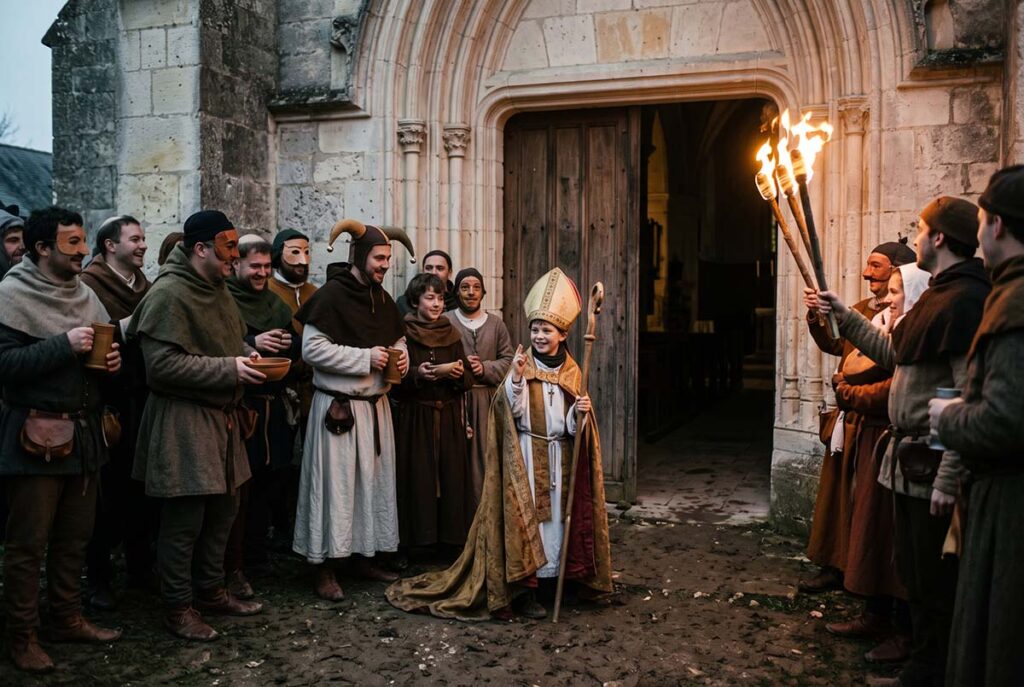
Carnival and the Feast of Fools place the Ars Nova controversy beside a very different form of disorder. Medieval inversion traditions could parody clerical rank, reverse ceremonial roles, and allow lower-status participants to occupy positions normally associated with their superiors. Some manifestations moved into spaces directly connected to Christian ritual life.
The ecclesiastical response wasn’t uniform. Authorities condemned some practices, tried to regulate others, confronted deeply rooted local customs, and sometimes encountered defenses of periodic folly. The record therefore won’t support a neat claim that a unified medieval Church deliberately invented Carnival as a pressure valve. Accommodation, persistence, regulation, defense, and suppression existed beside one another.
That messiness makes the comparison stronger rather than weaker. A festival exists in time. Even spectacular inversion can end. Ceremonial rank can be mocked today and restored tomorrow. The ordinary hierarchy doesn’t necessarily have to be rebuilt because its symbols were temporarily turned upside down.
This is where the calendar matters. Ecclesiastical authorities repeatedly attempted to determine when, where, and how ritual inversion could occur. Temporary disorder could therefore be fought, accommodated, or bounded without producing the same permanent change as a new technique embedded within recurring worship.
Ars Nova had no natural morning after.
A new way of measuring musical time could return at the next service and the one after that. Once the technique existed, musicians couldn’t simply pack it away when the festival ended. It altered what composition made possible inside ordinary ritual.
The contrast isn’t between a Church that loved Carnival and a Church that hated new music. History won’t sustain that simplification. The sharper distinction concerns what different kinds of disorder could do. One could remain intermittent and contested around the edges of ordinary life. The other could enter a recurring institutional system and change how that system operated.
Verdict
The previous episode established that prohibition often moves a practice rather than destroying it. Ars Nova refines that principle by showing what happens when the disputed practice can no longer be displaced to somewhere else.
John XXII’s decree is revealing because it doesn’t erase every category of musical complexity. It establishes terms. The inherited chant must retain structural authority, while innovation remains permissible only within boundaries that preserve the institution’s recognized form of worship. The act of regulation therefore tells us as much about ownership as it does about music.
Machaut’s later career shows that musical innovation could survive those boundaries and eventually inhabit monumental sacred culture. Carnival shows why temporary inversion and durable technical change weren’t identical institutional problems. One could end with the calendar. The other could become normal practice.
The larger pattern extends beyond medieval music. Institutions often describe conflicts through the language available to them: propriety, tradition, morality, purity, authenticity, decorum. Those categories may be sincere, but they can coexist with a deeper struggle over who possesses authority to alter the system through which the institution reproduces itself.
Ars Nova redistributed musical agency. The score could carry organizational decisions that once seemed inseparable from inherited ritual form, placing new control in the hands of composers and performers who understood the new language.
Power does not fear every disorder equally.
The Church didn’t fear the sound. It feared the moment the sound stopped carrying the word they controlled.
Frequently Asked Questions
What did Pope John XXII actually condemn about Ars Nova?
John XXII condemned specific new practices used in the Mass and canonical Hours, including elaborate rhythmic divisions, hockets, discants, and procedures he believed obscured inherited plainchant. His decree still allowed certain forms of consonance when the chant remained intact, so the document established limits on musical complexity rather than eliminating polyphony altogether.
What was Ars Nova in medieval music?
Ars Nova, meaning New Art, refers to fourteenth-century developments in rhythmic notation and polyphonic composition that gave musicians greater control over the division and coordination of musical time. Smaller note values and increasingly independent vocal lines expanded what composers could do with rhythm, text, and musical attention.
Who was Philippe de Vitry and why is he associated with Ars Nova?
Philippe de Vitry was a fourteenth-century French cleric, composer, poet, and intellectual closely associated with the theoretical innovations of Ars Nova. Older accounts often credit him straightforwardly with an Ars nova treatise, while modern scholarship has complicated that attribution. His importance is better understood through the broader theoretical tradition associated with his name.
Did the medieval Church ban polyphony?
No. Docta Sanctorum Patrum allowed selected consonant combinations under limited circumstances when the underlying chant remained intact. That exception reveals a regulated boundary between acceptable musical embellishment and practices that John XXII believed could displace the authorized sacred form.
What do Carnival and the Feast of Fools have to do with Ars Nova?
Carnival and Feast of Fools traditions provide a contrasting kind of disorder. Their temporary inversions of hierarchy were variously tolerated, defended, regulated, and condemned by ecclesiastical authorities. Ars Nova created a different institutional problem because its techniques could become recurring features of ordinary worship instead of ending with a festival.
What does the historical record actually establish about Church control of medieval musical innovation?
The strongest evidence shows ecclesiastical authority defining conditions under which musical change could enter worship. John XXII preserved certain forms of consonance while requiring inherited chant to remain structurally intact. The record therefore supports an argument about institutional jurisdiction more strongly than a simple story of conservative authorities rejecting every musical novelty.
Why does this episode matter beyond medieval music?
The episode shows how disputes framed through taste, propriety, tradition, or musical purity can also involve authority over systems. Ars Nova mattered because new musical techniques changed where organizational power could reside inside worship. The larger issue is who possesses the authority to determine the boundaries of acceptable change.
How did music become a political technology after the Ars Nova controversy?
The next stage shifts from regulating sacred form to deliberately using music for mobilization. Savonarola’s movement and Martin Luther’s Reformation demonstrate how institutions and challengers could organize people, replace inherited practices, and transmit ideas through communal song.